CNC (Computer Numerical Control) workshops have long been the go-to destination for manufacturers to transform designs into tangible products.
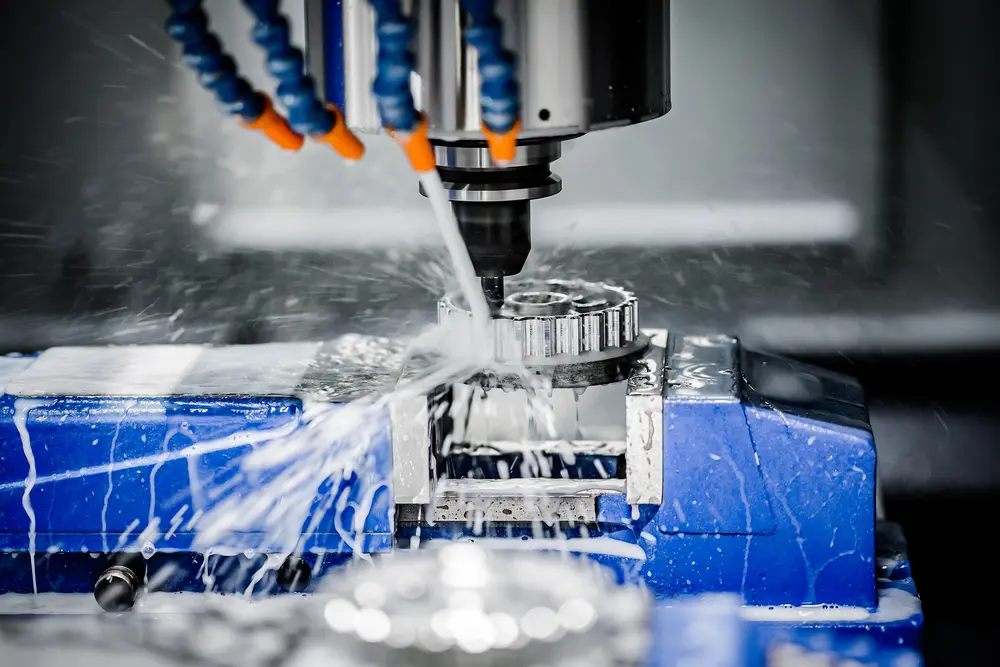


CNC (Computer Numerical Control) workshops have long been the go-to destination for manufacturers to transform designs into tangible products. But today, we are on the brink of a radical shift. CNC machines are no longer just silent execution tools; they have become intelligent, interconnected systems that form the heart of the "Fourth Industrial Revolution." Understanding these transformations is not a technical luxury but a strategic necessity for any company aspiring to stay ahead and seize future opportunities. In this article, we review the six most prominent technical trends that will shape the industry's face in 2025.
These six trends are real, but they're further along in workshops in Germany, the US, and increasingly China than they are across most of Egypt's CNC base. Egyptian manufacturing is still heavily concentrated in small, family-run shops where a trend like AI self-optimization is genuinely years away — the more immediate gap is inconsistent lead times, manual quoting, and quality control that depends on one experienced machinist rather than a repeatable, documented process. That gap has a real cost: it's a large part of why local and regional buyers still default to sourcing from Europe or Asia even when a domestic option would be faster and cheaper on paper.
Closing that gap in Egypt doesn't require every workshop to modernize at once — it requires a way for buyers to reach the shops that already operate closer to this standard, with real quality documentation and predictable turnaround, without having to vet a dozen workshops manually. That's the practical role a platform like Entag plays: aggregating vetted CNC capacity across Egypt under one ISO 9001:2015-backed quoting and quality process, so the gap between "where Egyptian manufacturing is" and "where these trends are heading" is something a buyer can route around today, not wait a decade for the whole industry to close on its own.
The role of Artificial Intelligence (AI) in manufacturing now goes beyond mere monitoring to become an effective partner in decision-making. Today's advanced AI systems can analyze vast amounts of operational data in real-time—from cutting tool performance and material temperature to subtle vibrations within the machine. Based on this analysis, these systems can automatically adjust operating parameters (like cutting speeds and feed rates) to achieve optimal performance. This reduces cycle times, extends tool life, and ensures flawless quality in every piece produced.
This shift represents a move from reactive manufacturing to proactive manufacturing. Instead of discovering a defect in a batch after production is complete, it is prevented from the outset. This technology focuses human operators' efforts on high-value tasks like design, planning, and innovation, while leaving routine processes to intelligent systems. The end result is higher productivity, less waste, and absolute quality that sets new standards for precision in the sector.
Hybrid Manufacturing, or the integration of "additive" technologies (like 3D printing) and "subtractive" technologies (like milling and turning), represents a qualitative leap in manufacturing philosophy. The limitations of traditional methods have long constrained designers' imaginations, especially regarding complex organic shapes or parts with internal cavities. Today, hybrid machines allow for building a part from scratch using Directed Energy Deposition (DED) technology and then finishing it with micron-level precision using traditional CNC tools, all on a single platform.
This integration not only opens new horizons for design but also redefines the concept of efficiency. It significantly reduces material waste, as material is added only where it is needed. It also simplifies the process chain and reduces total production time, making it ideal for complex prototypes, limited-quantity production, and repairing expensive parts whose replacement was once a major challenge. In short, hybrid manufacturing turns the geometrically impossible into the industrially possible.
The future of manufacturing no longer depends solely on automating the machine but on automating the entire workflow. Comprehensive automation transforms the workshop into an integrated ecosystem where smart robots transfer raw materials, load and unload parts from machines, and move semi-finished products between stations without human intervention. This system enables production lines to operate for long, continuous hours, even overnight and on weekends, maximizing production capacity.
In addition to increasing productivity, comprehensive automation improves workplace safety by reducing direct interaction between workers and hazardous machinery. It also ensures a consistent level of quality, as every step is executed in a programmed and precise manner. For companies, this means the ability to meet large orders in record time while achieving significant savings in labor and operational costs in the long run, thereby enhancing their market competitiveness.
The industrial sector faces increasing pressure to reduce its environmental impact, and sustainability has transformed from a mere slogan into a key competitive standard. In the world of CNC, this movement is evident in a persistent pursuit of the "Circular Economy," which aims to minimize waste and maximize resource reuse. This is achieved through advanced CAM software that optimizes "nesting" – arranging the shapes to be cut from a metal sheet – to utilize every square centimeter of raw material, drastically reducing scrap (metal waste).
The initiative doesn't stop at design; green practices extend throughout the workshop's entire lifecycle. Most resulting metal waste is 100% recyclable. Furthermore, leading companies are working to improve the energy efficiency of machines, using biodegradable coolants or dry machining systems that reduce water consumption. These practices not only enhance a company's environmental image but also lower operational costs, proving that environmental responsibility and financial profitability can go hand in hand.
Global disruptions in recent years have revealed the fragility of long and complex supply chains. As a strategic response, companies are rapidly moving towards "regionalizing" their supply sources. This means preferring local or regional suppliers who can provide the speed, flexibility, and reliability difficult to achieve when dealing with suppliers from other continents. The low price is no longer the sole decisive factor; hidden shipping costs, delay risks, customs complexities, and intellectual property security have become part of the decision-making equation.
For a local manufacturing partner with high technical capabilities, this shift represents a golden opportunity. It guarantees the client quick response to orders, direct and continuous communication during product development, and high flexibility in making modifications or producing small batches. It also reduces the client's carbon footprint by shortening shipping distances. In short, the local supplier transforms from a mere executor into a vital strategic partner for the stability and continuity of the client's operations.
The Digital Twin represents the peak of integration between the digital and physical worlds. It is an identical, dynamic virtual copy of an entire manufacturing process, or even an entire production facility. Before operating any real machine, everything is simulated: from the cutting tool's movement and path to potential axis collisions, and even material flow within the workshop. This comprehensive simulation allows engineers to detect errors, optimize processes, and evaluate different production scenarios in a virtual environment free of risks and costs.
This proactive vision translates into very tangible benefits. It almost eliminates costly "trial and error" experiments on the actual machine and ensures that the operational program (G-Code) sent to the machine is optimal from the start. It also gives project managers and clients unprecedented visibility and complete transparency into work progress, from the initial design file to the final product. The Digital Twin is not just a simulation tool; it is a bridge connecting design and manufacturing with utmost confidence and clarity.
The future of precision manufacturing is being shaped today through the interaction of these powerful trends: intelligence in analysis, flexibility in technology, efficiency in operation, responsibility towards the environment, proximity to the market, and clarity through simulation.
At Entag, we do not merely observe these transformations from afar; we integrate their fundamental principles into the core of our operations. We see in every project an opportunity to apply technological intelligence to achieve the required precision, leverage our flexibility as a trusted regional partner to provide swift responses, and commit to quality and sustainability to deliver the best value for our clients.