Learn how precision CNC milling is used in aluminum heat sink manufacturing to maximize thermal performance, improve cooling efficiency, and deliver custom thermal solutions for industrial electronics.
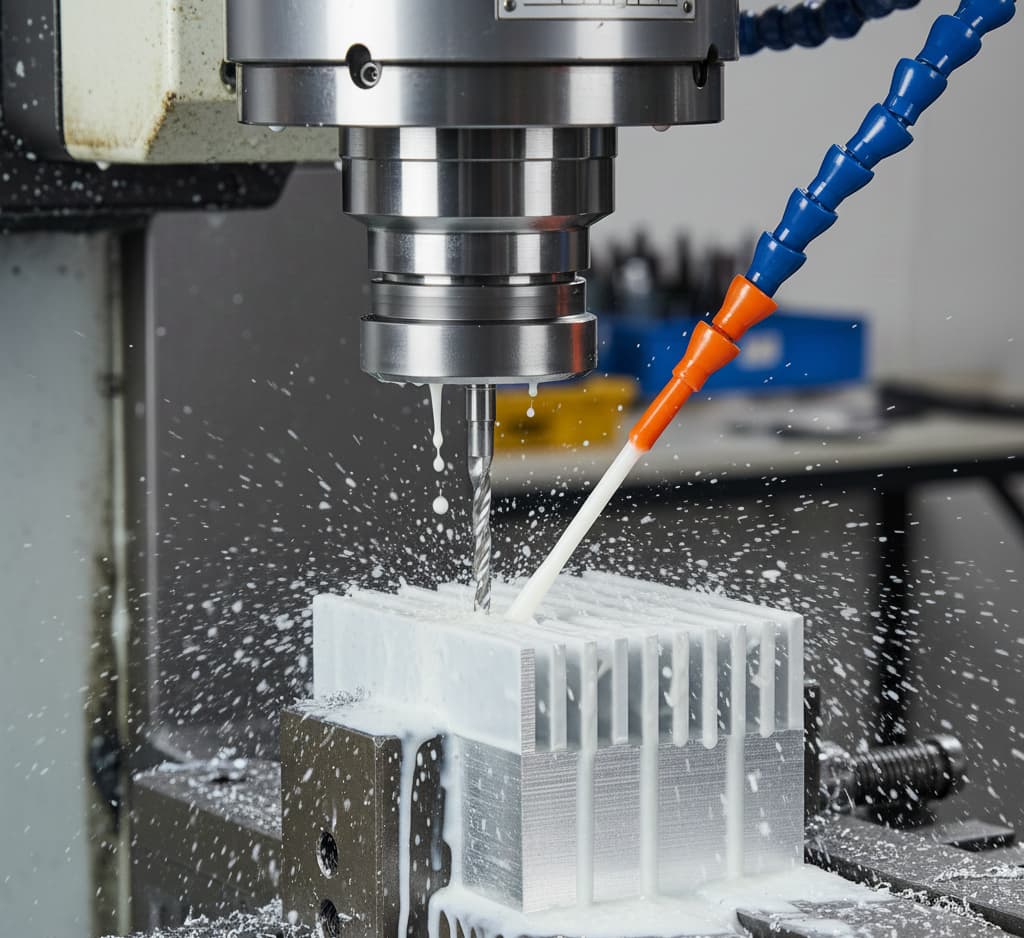


Heat is one of the greatest reliability threats in industrial electronics. As components operate above their ideal temperature range, efficiency drops and early failure becomes inevitable.
This is why aluminum heat sink manufacturing remains critical across power electronics, automation systems, LED drivers, and telecommunications equipment in Egypt and the Middle East.
CNC-milled aluminum heat sinks allow engineers to maximize surface area, control airflow behavior, and produce thin, micro-machined fins that extrusion alone cannot achieve.
Aluminum offers the ideal balance of thermal performance and machinability:
Grades such as 6061 and 6063 dominate passive cooling device production due to their predictable cutting characteristics and surface-finish quality.
Achieving high-performance cooling requires modern machining strategies, not just raw material selection.
Machining ultra-thin fins demands:
This allows fin thickness as low as 0.5–0.8 mm, maximizing surface area for convection.
Used for:
These geometries enable more efficient cooling in compact systems.
Finishing methods improve both performance and durability:
For manufacturers in Egypt, Entag provides engineering validation, CNC production oversight, and inspection support through vetted machining partners—acting as the single accountable point for thermal components without adding friction to the workflow.
Heat sinks must be engineered around airflow, load characteristics, and manufacturability.
Key considerations include:
Each parameter has a measurable effect on convection and conduction performance.
Rapid prototyping allows engineers to test thermal behavior early.
Short-cycle prototyping enables evaluation of:
This stage often includes CNC machining aluminum parts for electronics, functional 3D-printed mockups, or hybrid samples.
During scaling, Entag’s partners ensure consistency in fin thickness, parallelism, and thermal flatness across repeated production runs.
Modern designs often merge the heat sink and enclosure into a single CNC-milled structure.
Benefits:
These housings can include milled channels, mounting bosses, internal airflow paths, and direct contact pads for heat-generating components.
Different applications require different aluminum alloys:
Choosing the correct alloy directly influences machining behavior and thermal results.
Precision thermal components demand strict inspection.
Typical QC includes:
These ensure the heat sink performs as modeled, especially when used in custom thermal management solutions engineering.
A power electronics company required a compact heat sink with fins thinner than extrusion could achieve. Engineers designed a fin array of 0.6 mm thickness and 1.2 mm spacing over a 120 mm length.
CNC micro-machining achieved the geometry with uniform fin height and controlled tool deflection. After bead blasting and black anodizing, a 3D-scanned inspection confirmed the fins met tolerance across the entire profile.
Result: Thermal performance improved by 18%, keeping the module within safe operating temperatures without increasing fan power or enclosure size.
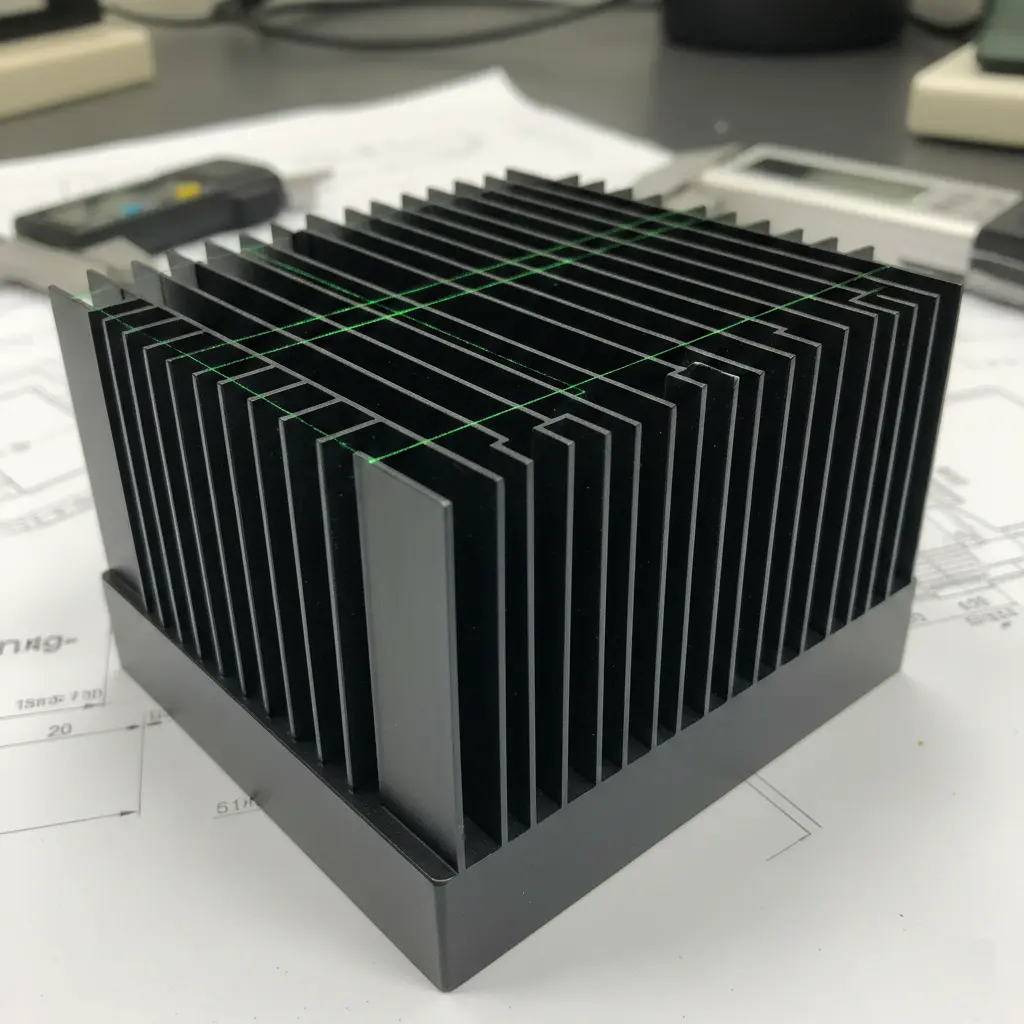
Precision CNC milling enables heat sinks that extrusion simply cannot produce—thin fins, engineered airflow patterns, and integrated enclosure solutions that maximize thermal efficiency.
Aluminum heat sink manufacturing remains essential for power electronics, industrial controls, and high-density cooling systems across Egypt and the Middle East. With the right machining techniques, material selection, and quality control measures, CNC-milled heat sinks provide unmatched thermal stability and long-term reliability.