Electrostatic Coating Cable Trays for Industrial Style Shops
Table of contents
In commercial and industrial-style retail spaces, cable management is not merely an aesthetic choice; it is a critical infrastructure requirement. The primary operational risk in these environments is the exposure of electrical systems to mechanical damage, dust accumulation, and environmental humidity.
For shop owners and plant managers in Cairo, utilizing substandard or poorly coated trays leads to rapid finish degradation and potential electrical grounding failures. The cost of downtime during a retrofitting project or the scrap generated by damaged wiring during a short circuit far outweighs the initial investment in precision-engineered, electrostatically coated systems. Quality manufacturing ensures that the cable management system survives the installation phase without chipping and maintains its structural integrity over a 15–20 year service life.
What is the Functional Role of Electrostatic Coating Cable Trays in Production?
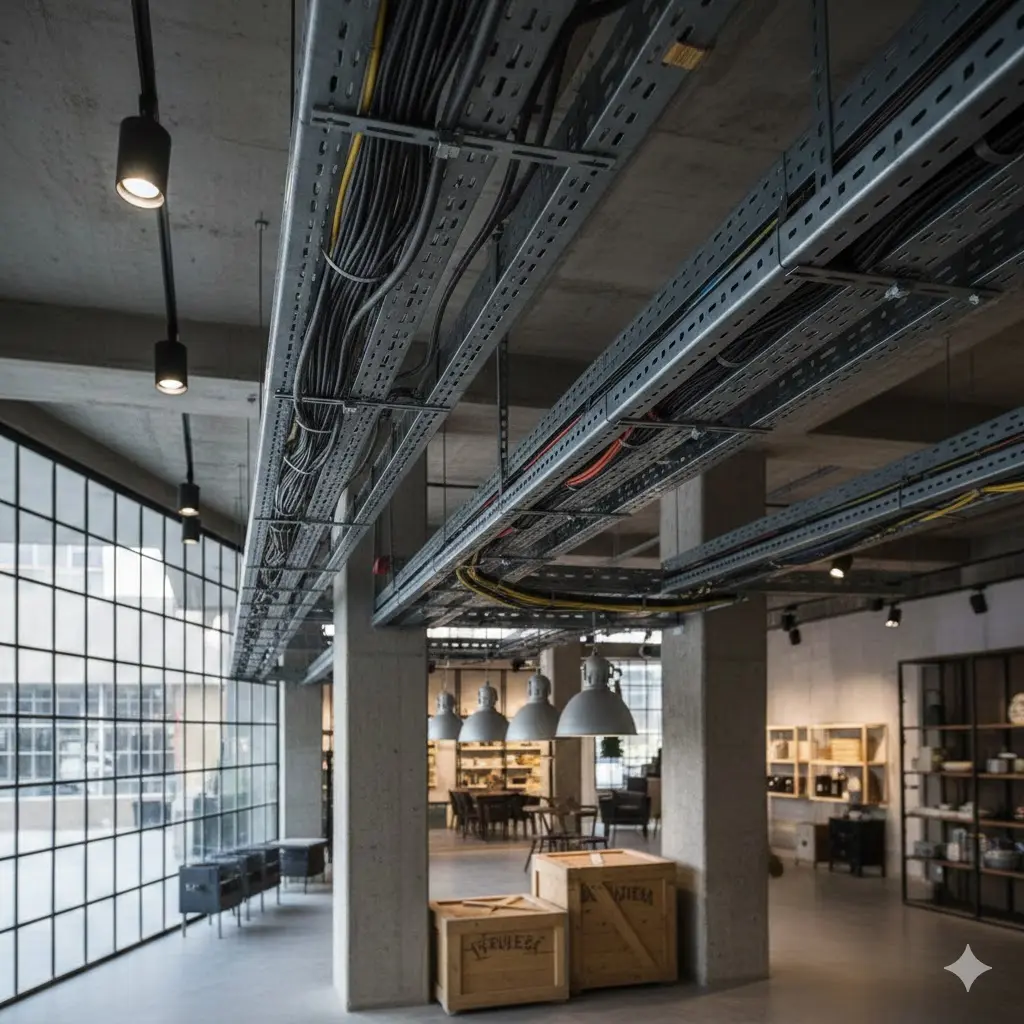
Electrostatic coating Cable Trays serve as the primary routing architecture for power, data, and communication lines. In industrial-style shops, these trays are often exposed, requiring a finish that provides both industrial-grade protection and a consistent visual profile.
Where are they applied? Routing heavy-duty cabling in retail showrooms, converted warehouses, and commercial workshops.
How do they integrate with equipment? Through direct mounting to steel rafters or concrete ceilings using threaded rods and brackets.
What are the consequences of failure? Poorly applied coatings lead to "pinholing," where oxidation begins under the paint layer. In Cairo’s humid or dusty pockets, this results in rust flakes falling onto merchandise and sharp edges that can strip cable insulation, leading to catastrophic fire risks.
How Does Material Selection Influence Engineering Performance?
The performance of a cable tray depends on the synergy between the substrate material and the electrostatic finish.
Substrate Choice: Typically Cold Rolled Steel (CRS) for precision or Pre-Galvanized Steel for enhanced base corrosion resistance.
Coating Chemistry: Thermoset epoxy or polyester powders. Epoxy offers superior chemical resistance, while polyester provides UV stability—essential for shops with large glass storefronts exposed to Cairo’s high solar radiation.
Hardness and Adherence: Coatings are engineered to meet specific hardness levels (typically H to 2H pencil hardness). This ensures the tray can withstand the friction of pulling heavy-gauge cables through the run without the coating stripping off.
Thermal Management: The coating must remain stable under the ambient heat generated by high-voltage cables.
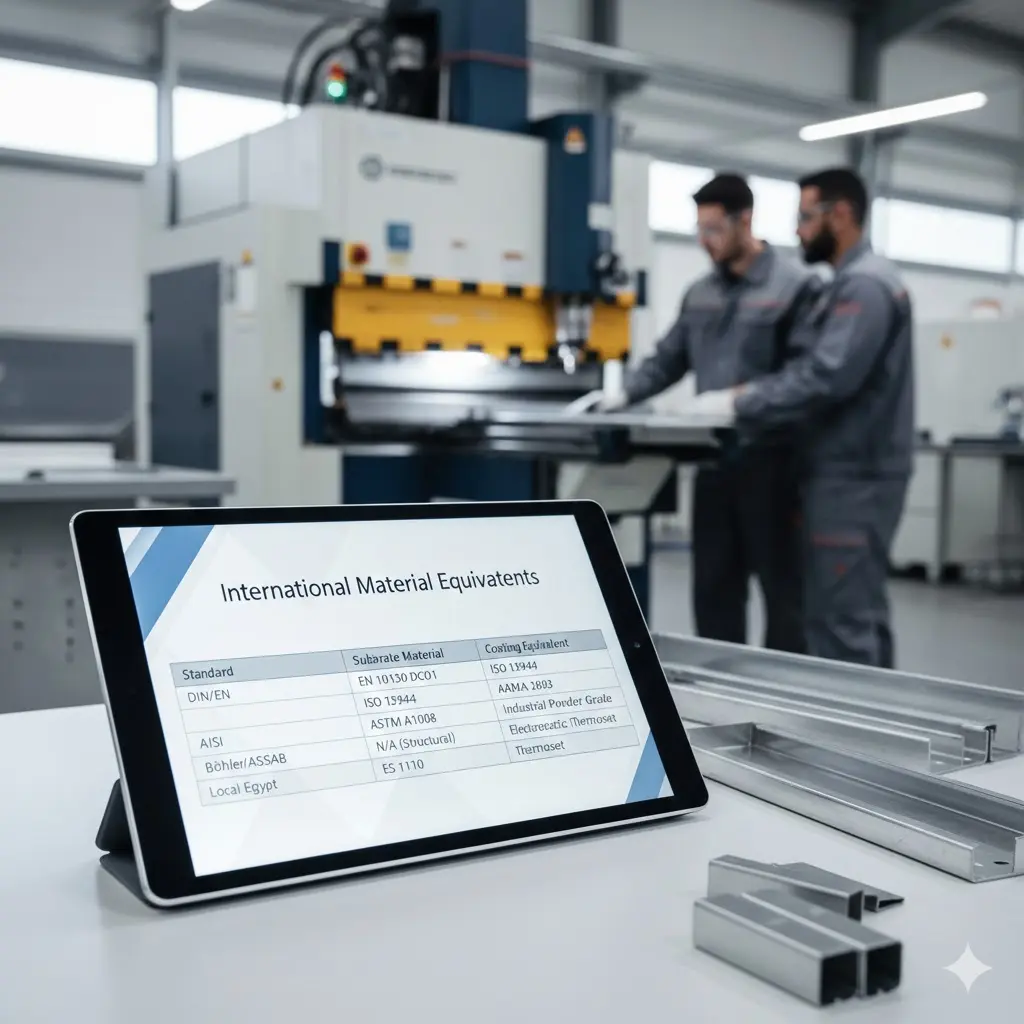
Which International Material Equivalents are Used in Manufacturing?
For tooling and structural cable components, we adhere to the following material standards to ensure global compatibility:
Standard
Substrate Material
Coating Equivalent
DIN / EN
EN 10130 DC01
ISO 12944
AISI
ASTM A1008
AAMA 2603
Böhler / ASSAB
N/A (Structural)
Industrial Powder Grade
Local Egypt
ES 1110
Electrostatic Thermoset
What are the Mandatory Steps in the Manufacturing Process?
Raw Material Sourcing: Procurement of certified cold-rolled steel sheets with verified thickness tolerances to ensure load-bearing calculations remain accurate.
CNC Punching and Perforation: Trays are perforated for ventilation and cable tie-downs. Using CNC technology prevents burrs; uncleaned burrs are a primary cause of cable insulation tears.
Precision Bending: Utilizing CNC press brakes to achieve consistent 90-degree flanges. Incorrect angles lead to misalignment during long-run installations.
Pre-treatment (Chemical Cleaning): A multi-stage degreasing and phosphating process. If oils remain on the steel, the electrostatic bond will fail, leading to "delamination."
Electrostatic Powder Application: Charged powder particles are sprayed onto the grounded tray. This ensures 100% coverage, including inside corners and perforations.
Curing (Oven Baking): The trays are baked at 180°C to 200°C. Controlled ramp-up and soak times are vital; under-cured trays remain soft, while over-cured trays become brittle and crack.
Final Dimensional Inspection: Verification of fitment and finish before dispatch.
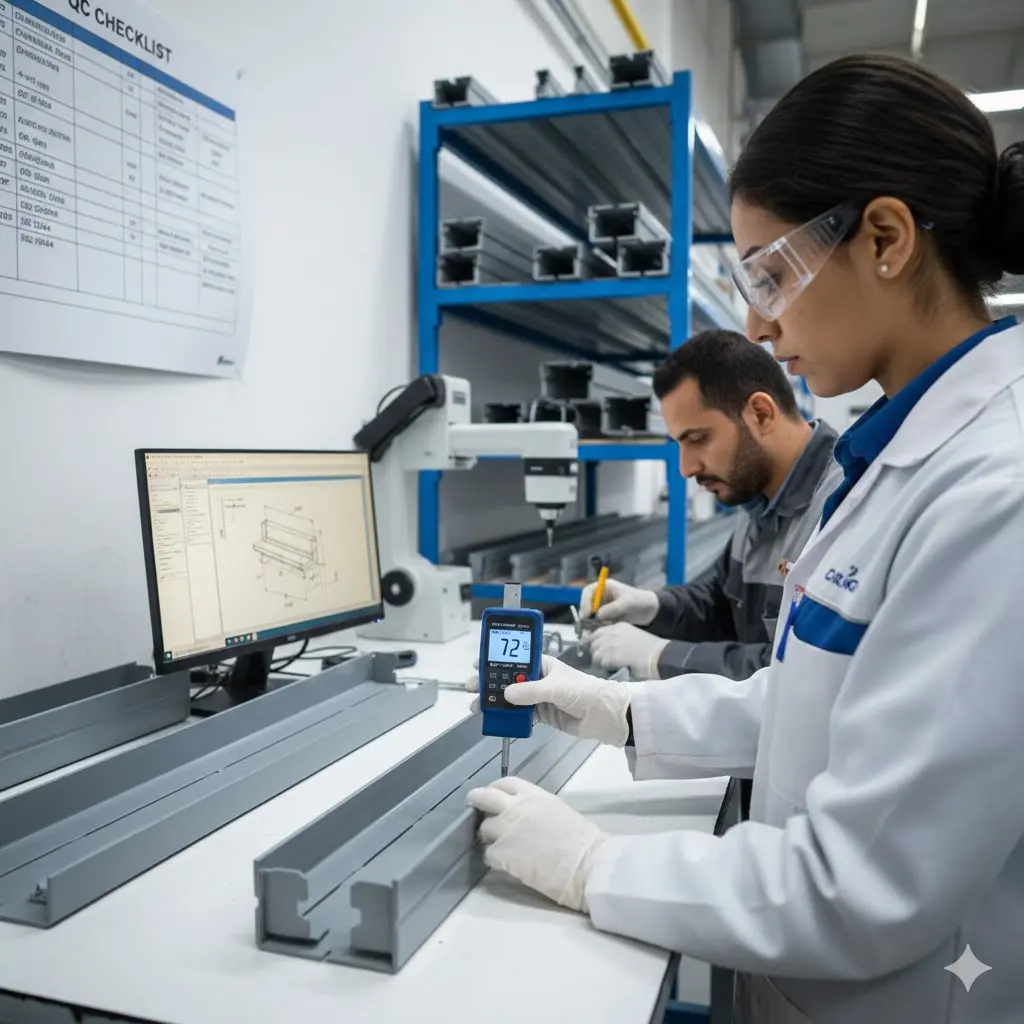
How is Quality Control and Inspection Executed?
Reliability in industrial cable management is verified through:
Dimensional Inspection: Verification of width, height, and length to within ±1.0mm to ensure compatibility with standard joiners and brackets.
Coating Thickness Gauge: Utilizing ultrasonic or magnetic induction gauges to ensure a consistent dry film thickness (DFT) of 60–80 microns.
Cross-Hatch Adhesion Test: Ensuring the coating cannot be peeled from the substrate even under mechanical stress.
Earth Continuity Testing: Ensuring the tray system can be properly grounded to mitigate electrical hazards.
How Do Load-Bearing Calculations Prevent Structural Sagging?
In industrial-style shops, Cable Trays often carry significant weight over long spans. Failure to calculate the Safe Working Load (SWL) can lead to structural deformation, which compromises the electrostatic coating and creates a safety hazard for those below.
Weight Rationale: We calculate the total weight per linear meter (including a 25% safety margin for future cable expansion).
Support Spacing: In Cairo industrial projects, we typically recommend support intervals of 1.5m to 2.0m. Exceeding these spans without upgrading the material gauge leads to "mid-span deflection."
Deflection Limits: Our manufacturing follows the L/200 rule, ensuring that the tray does not deflect more than 1/200th of the span distance.
This engineering step ensures that the electrostatic finish remains intact, as excessive bending would cause micro-cracks in the cured powder layer.
Why Choose On-Demand Local Manufacturing in Cairo?
Reduced Import Lead Times: Eliminate the 8-12 week wait for international sea freight.
Faster Facility Recovery: Immediate replacement of damaged sections during maintenance.
Local Engineering Support: On-site consultations to ensure the system meets specific Cairo building codes and environmental conditions.
How Does Maintenance Impact the Lifecycle of Coated Systems?
Even the highest quality electrostatic coating Cable Trays require a structured maintenance protocol to ensure they reach their 20-year design life in Cairo’s dusty environment.
Dust Accumulation & Heat Dissipation: In "Industrial Style" shops, dust acts as an insulator. If not cleaned, it traps heat around the cables, which can eventually soften the electrostatic coating. We recommend a bi-annual vacuuming or compressed air cleaning.
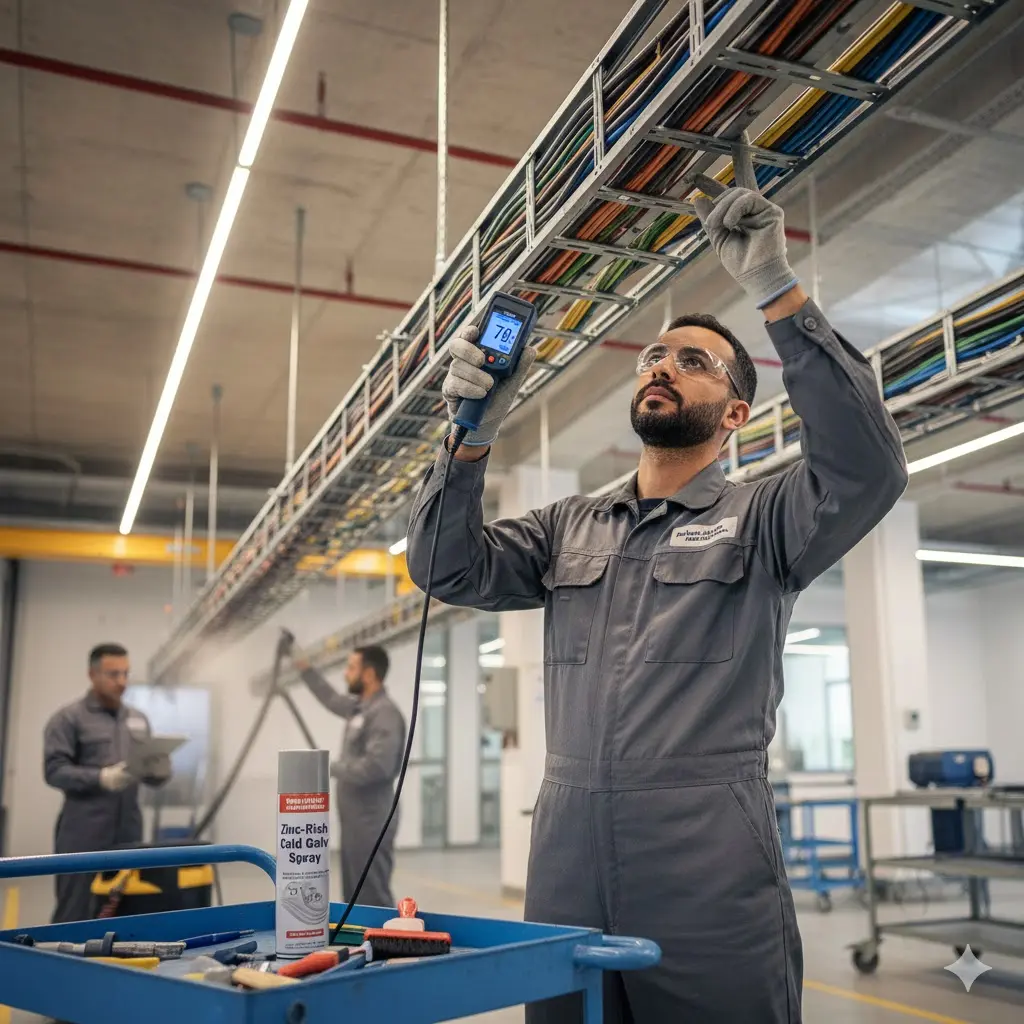
Coating Integrity Audits: During routine electrical inspections, maintenance teams should check for "impact zones"—areas where ladders or equipment may have chipped the finish.
Touch-Up Protocols: If a chip occurs, it must be sealed with a zinc-rich cold galvanizing spray or a matching industrial enamel to prevent "creeping corrosion" from undermining the surrounding electrostatic bond.
Loading Audits: When adding new data or power lines, always refer back to the original Safe Working Load (SWL) calculations provided during the manufacturing phase to prevent structural failure.
Frequently Asked Questions (FAQ)
Q: Can electrostatic coating withstand outdoor exposure in Cairo?
A: Yes, provided a UV-stable polyester powder is used. This prevents chalking and fading caused by high solar intensity.
Q: Is it better to repair a rusted tray or replace it?
A: For Cable Trays, replacement is generally safer. Once the substrate is compromised, the structural integrity and electrical continuity are at risk.
Q: What is the typical lead time for a custom order in Egypt?
A: Depending on the volume and specific RAL color requirements, typical lead times in Cairo range from 5 to 10 business days.
Q: How do you ensure the coating doesn't crack during installation?
A: By controlling the curing temperature and duration, we ensure the coating maintains enough flexibility to handle the minor stresses of installation without fracturing.