Learn how tool steel neck support rings are manufactured using 1.2083 tool steel for PET preform molds. Explore CNC machining, heat treatment, surface finishing, and quality control for mold tooling components in Cairo, Egypt.
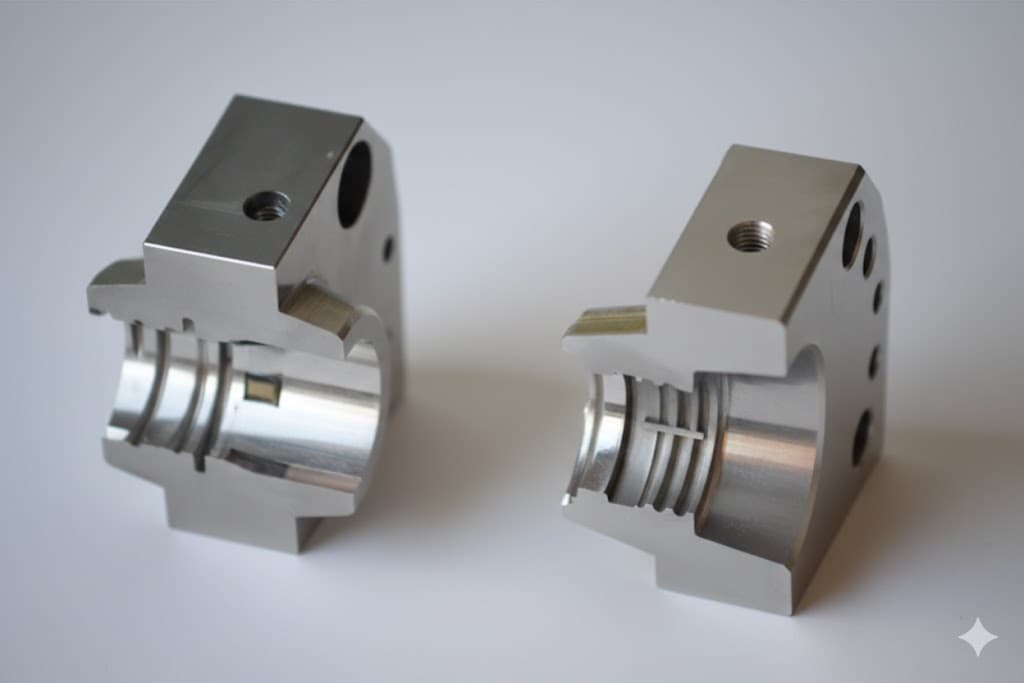


In PET preform injection molding, dimensional accuracy at the neck finish is critical. The neck support ring plays a central role in maintaining preform geometry during injection, cooling, and ejection. Any distortion or wear in this component directly affects thread quality, cap fit, and downstream bottle performance.
Because of this, manufacturers rely on corrosion-resistant, high-polish tool steels such as 1.2083 when producing tool steel neck support rings for preform molds. When properly machined and heat treated, these rings provide excellent dimensional stability, surface finish, and resistance to humid production environments.
With on-demand 1.2083 tool steel machining in Cairo, Egypt, mold makers and maintenance teams can now source precision replacement and custom neck support rings without long international lead times.
A neck support ring is a precision mold tooling component that:
It operates in direct contact with hot polymer and cooling circuits, making material selection and surface quality essential for:
Neck support rings are considered wear components in preform mold systems and must be manufactured to tight tolerances to avoid production defects.
1.2083 tool steel is a martensitic stainless mold steel widely used for plastic injection tooling components exposed to moisture and aggressive cooling conditions.
These properties make it well-suited for:
Unlike carbon tool steels, 1.2083 resists rusting inside cooling channels and around condensation-prone mold areas, extending service life and reducing surface pitting that can transfer to molded parts.
Different suppliers use proprietary names for equivalent grades of 1.2083 stainless mold steel. Below is a reference table commonly used in mold tooling fabrication:
ESR (Electro-Slag Remelted) variants offer improved cleanliness and polishability, which is especially beneficial for optical and high-gloss molding applications.
Material traceability and supplier certification are essential to ensure consistent heat treatment response and corrosion resistance in mold tooling components.
Producing precision preform mold neck support rings requires strict control across machining, heat treatment, and finishing stages.
Manufacturing begins with certified 1.2083 tool steel sourced from approved suppliers such as Böhler or ASSAB.
Each batch is supplied with:
Consistent metallurgy ensures predictable hardness, polishing behavior, and corrosion resistance.
Neck support rings are machined from annealed or pre-hardened tool steel using CNC milling and CNC turning operations.
Typical machining processes include:
Multi-axis CNC machining ensures:
Dimensional accuracy at this stage is critical, as post-hardening machining options are limited.
Depending on mold design and production requirements, neck support rings may undergo:
Target hardness typically ranges between 48–52 HRC, balancing:
Stress relief is especially important to prevent distortion that could compromise neck concentricity.
After heat treatment, final dimensional control is achieved through:
Finishing achieves:
Surface roughness directly affects release behavior and cosmetic quality of the molded neck finish.
Well-manufactured neck support rings contribute to:
Poorly machined or worn rings lead to:
Because replacement of neck support rings is far less expensive than replacing cavity blocks, they are often treated as controlled wear parts within preventive maintenance schedules.
Reliable mold tooling components require strict inspection before installation:
For multi-cavity molds, consistency across all rings is critical to ensure uniform bottle neck geometry across all cavities.
At Entag, inspection is integrated into the production workflow to maintain accountability across machining, heat treatment, and finishing stages.
On-Demand Manufacturing of Mold Tooling Components in Egypt
Traditionally, mold tooling components such as neck support rings were sourced through:
With local mold tooling fabrication in Cairo, Egypt, manufacturers can now:
Entag coordinates CNC machining, heat treatment, precision grinding, and inspection as a single manufacturing interface, ensuring consistency and shorter delivery cycles.
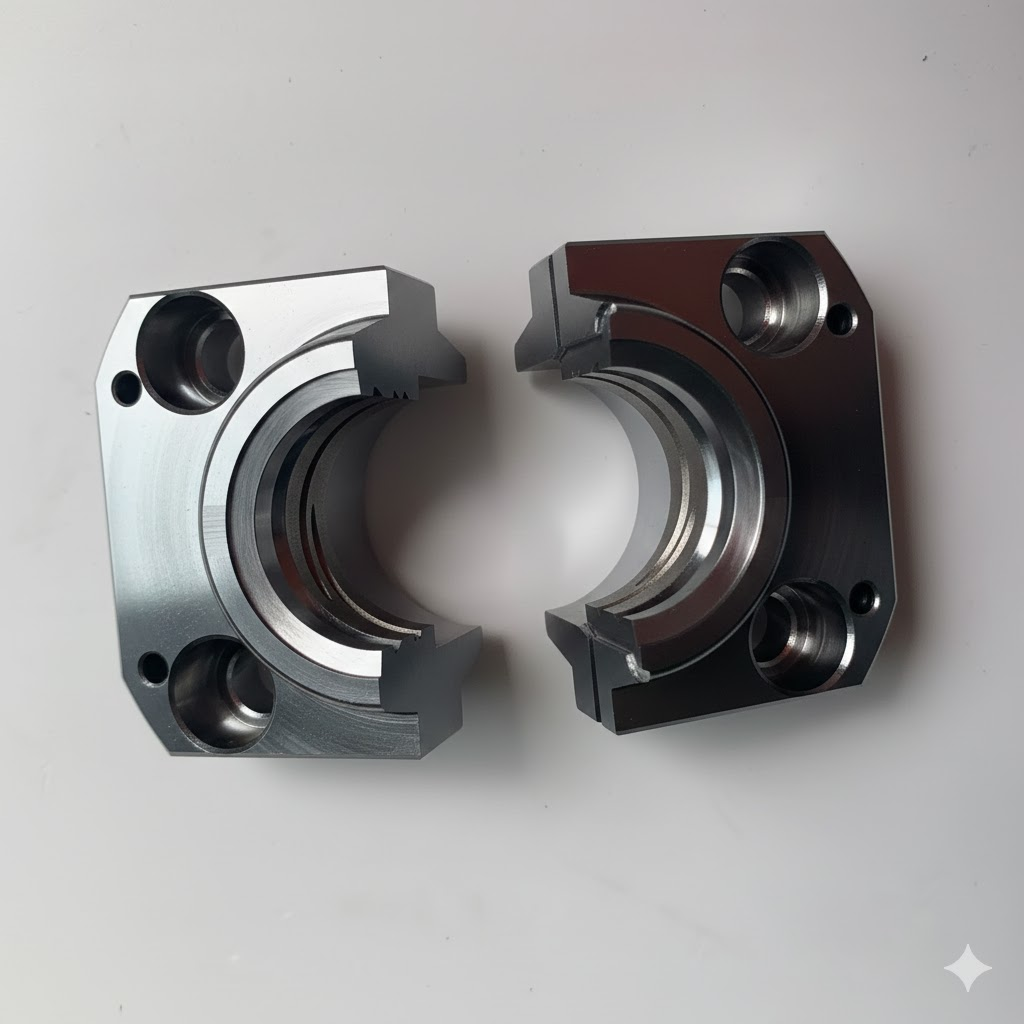
Conclusion
In PET preform injection molding, the neck support ring is a small component with a major impact on product quality and mold reliability. Using corrosion-resistant 1.2083 tool steel, combined with precision CNC machining, controlled heat treatment, and disciplined finishing, ensures long service life and stable production performance.
Through localized, on-demand manufacturing in Egypt, mold owners and maintenance teams can now source critical mold tooling components quickly without compromising technical quality.
Need Custom Tool Steel Neck Support Rings for Your Mold?
Entag manufactures tool steel neck support rings from certified 1.2083 tool steel, with full CNC machining, heat treatment, precision grinding, and quality inspection.
Upload your drawing or sample and receive an on-demand manufacturing quote — produced in Cairo, Egypt, and built for injection molding reliability.
Because it offers corrosion resistance, good polishability, and stable mechanical properties under thermal cycling, making it ideal for humid injection molding environments.
Yes. Many mold shops machine 1.2083 in pre-hardened state (~30–34 HRC) to reduce post-machining distortion, followed by finishing operations.
Yes. They are typically replaced during scheduled mold maintenance rather than waiting for cavity damage to occur.
Yes. Inner diameter, locking features, and cooling interfaces can all be customized based on mold design and bottle neck finish specifications.
Yes. On-demand manufacturing allows rapid production of replacement tooling without waiting for international shipments.