Airbus has announced the adoption of Directed Energy Deposition (DED) technology within advanced CNC systems for the manufacturing and repair of aircraft components, marking a major step in the global shift toward Hybrid Manufacturing technologies that combine traditional machining with additive manufacturing.
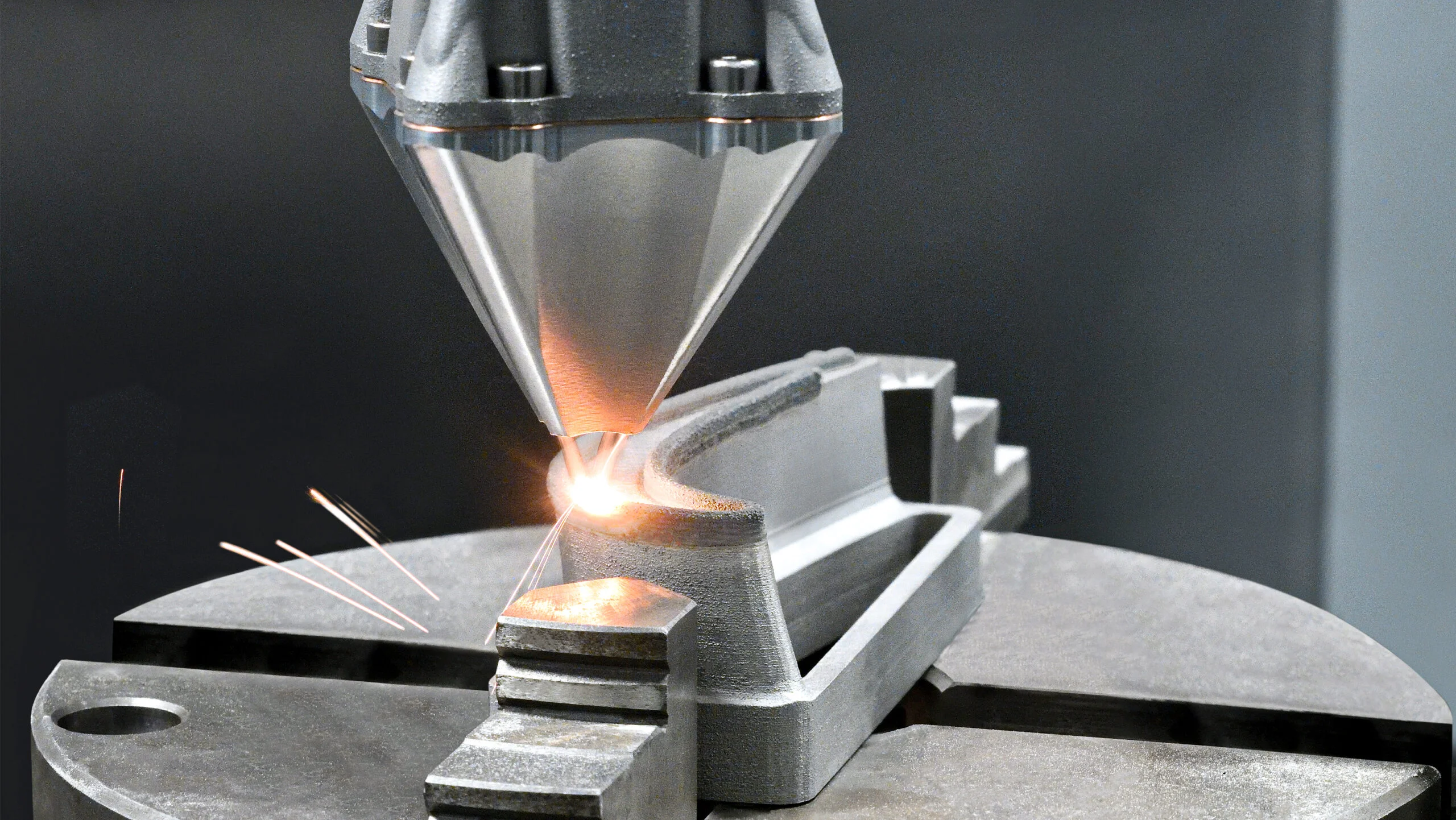


Airbus has announced the adoption of Directed Energy Deposition (DED) technology within advanced CNC systems for the manufacturing and repair of aircraft components, marking a major step in the global shift toward Hybrid Manufacturing technologies that combine traditional machining with additive manufacturing.
Reports issued by the innovation department on the official Airbus website, along with specialized analyses from Additive Manufacturing Magazine and Machine Design, confirm that this technology enables major manufacturers to reduce production time and material consumption by up to 50%, while significantly improving the accuracy of repair operations and the production of complex parts.
This technology is no longer limited to global research centers or major aerospace factories. Today, it is practically available to the industrial sector in Egypt through advanced manufacturing solutions provided by Entag, in line with the latest global trends in smart manufacturing.
When a company of Airbus’s scale adopts DED technology, the message is clear: speed, waste reduction, and extending the service life of industrial components with maximum efficiency.
At Entag, we consider this transformation a strong confirmation of the approach we follow: smarter, more flexible, and future-ready manufacturing.
DED technology is based on depositing new metal with high precision using a directed energy source (laser or plasma arc) onto the original part, then metallurgically bonding it to create a uniform, high-strength structure.
In practical terms, this technology enables:
This technology is no longer a “future solution” — it has become an immediately applicable industrial tool.
If you are facing:
Hybrid manufacturing solutions can now reduce downtime from months to days.
At Entag, we do not rely on conventional machining alone. We operate through an integrated system that includes:
We do not just provide services — we transfer the latest global manufacturing technologies directly to our clients’ production lines in Egypt and the region.
Contact the Entag expert team today.