An in-depth look at CNC turning St52 free-cut steel for door lock components, highlighting precision machining techniques, material advantages, and performance benefits in security hardware applications.


In industrial and high-security architectural applications, the integrity of door locks and hinge assemblies is non-negotiable. For plant managers and facility engineers, the failure of a minor turned component—such as a locking pin, hinge barrel, or cam—does not just represent a part replacement; it represents a breach in security protocols or a total stoppage of logistical flow.
The operational risk of using sub-standard components includes premature mechanical fatigue, seized pivot points, and catastrophic failure under shear stress. In a production environment, the cost of downtime caused by a broken hinge on a heavy-duty access point far outweighs the initial procurement savings of "commodity" hardware. Quality in CNC turning ensures that dimensional offsets remain within micron-level tolerances, preventing the cumulative wear that leads to system failure.
According to a 2023 report by Siemens, the cost of unplanned downtime in the manufacturing industry has risen significantly, with Fortune Global 500 companies now losing an average of $1.5 million per hour of downtime. In a facility context, a failed heavy-duty door hinge on a logistics hub or a cleanroom airlock can stall entire workflows.
Door lock and hinge components produced via CNC turning serve as the primary load-bearing and articulating elements in heavy-duty entry systems.
Failure to maintain strict tolerances in these parts leads to "door sag," increased latch friction, and eventually, the inability to secure the facility. In Cairo’s industrial zones, where dust and thermal expansion are constant variables, these components must be machined to account for tight fits that do not seize under environmental stress.
The selection of St52 (1.0570 / S355J2G3) for these components is driven by the need for a high yield strength steel that offers superior weldability and toughness compared to standard mild steels.
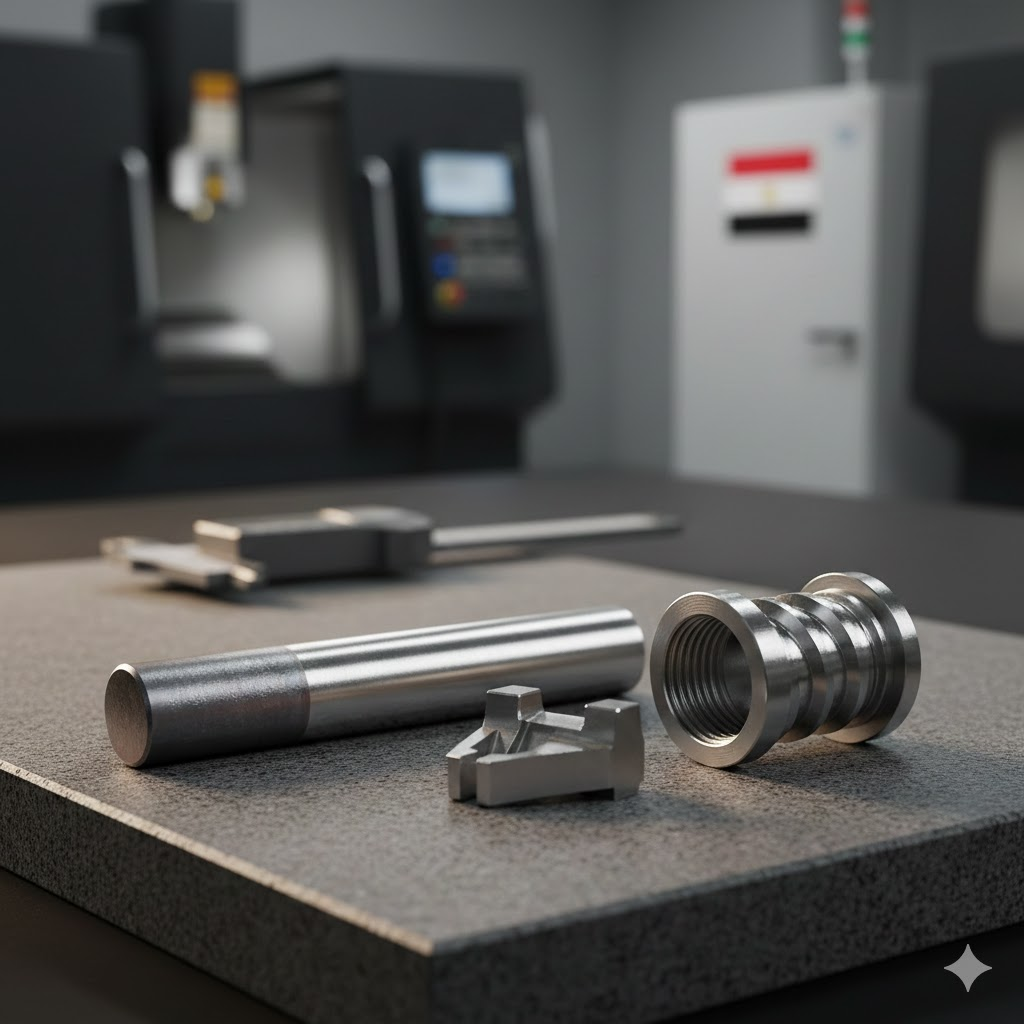
In the procurement of industrial components, trust is verified through adherence to international standards. For CNC turning door hinge parts and locking components, we align production with global benchmarks to ensure interchangeability and safety.
This adherence to rigorous standards eliminates the "guesswork" often associated with local fabrication and ensures that every component is a reliable alternative to original equipment manufacturer (OEM) parts.
Quality control is the differentiator between a "spare part" and an "engineered component." At our facility, inspection includes:
By leveraging precision CNC turning in Cairo, Egypt, manufacturers can bypass the logistical bottlenecks of international shipping. Local production allows for immediate design adjustments based on physical samples and ensures that replacement parts are available on-demand, significantly reducing the "risk-to-repair" window for critical infrastructure.
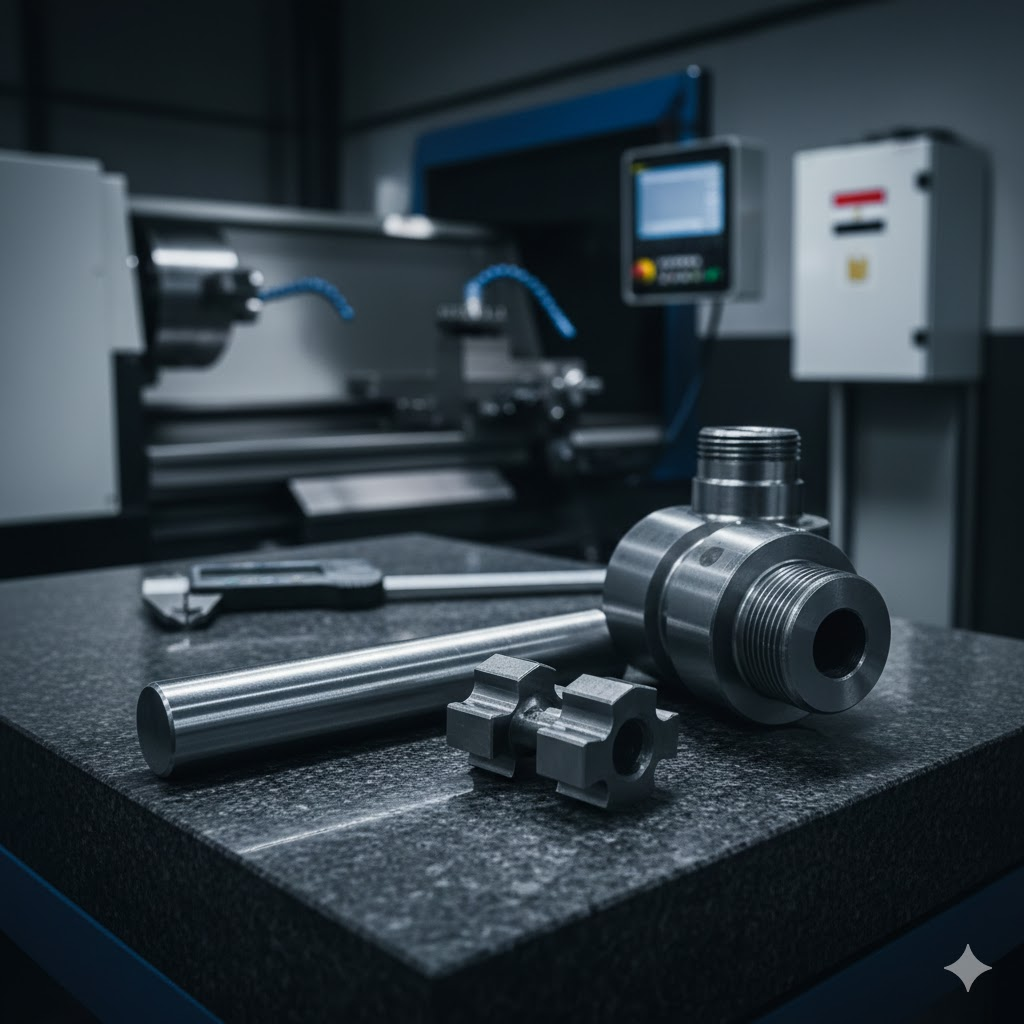
In the Egyptian industrial sector, reliance on imported door and lock hardware often leads to "maintenance debt"—where machines and facilities operate with compromised components while waiting for shipments. The demand for custom metal fabrication in Cairo is driven by the need for parts that can withstand local environmental conditions, including high ambient temperatures and fine-particle dust. Producing St52 components locally ensures that the material grade matches the structural requirements of Egyptian industrial builds.
CNC turning of St52 for door lock and hinge components is a specialized process where material science meets mechanical precision. Selecting the correct steel grade and ensuring rigorous inspection protocols reduces the total cost of ownership by extending service life and preventing unexpected failures. In a production environment, the discipline of high-quality manufacturing is the only way to ensure long-term operational uptime.
Entag specializes in the precision CNC turning and milling of complex industrial components. From stainless steel hinge components to custom metal fabrication of locking systems, we provide high-tolerance solutions directly from our facility in Cairo, Egypt.
Would you like to upload a technical drawing or a physical sample for a production quote? Send it now” https://app.entag.co/get-a-quote
St52 provides higher yield strength and better fatigue resistance, which is critical for doors that undergo hundreds of cycles daily.
Yes. While St52 is standard, we also provide stainless steel hinge components (304 or 316L) for chemical or coastal applications.
Standard production runs typically range from 5 to 10 working days, depending on heat treatment requirements.
In most industrial cases, replacement with a precision-turned component is more cost-effective than repair, as it restores the original tolerances of the assembly.