Technologies
How 1.2379 tool steel and precision CNC machining extend expander arm life on heavy-duty production lines.
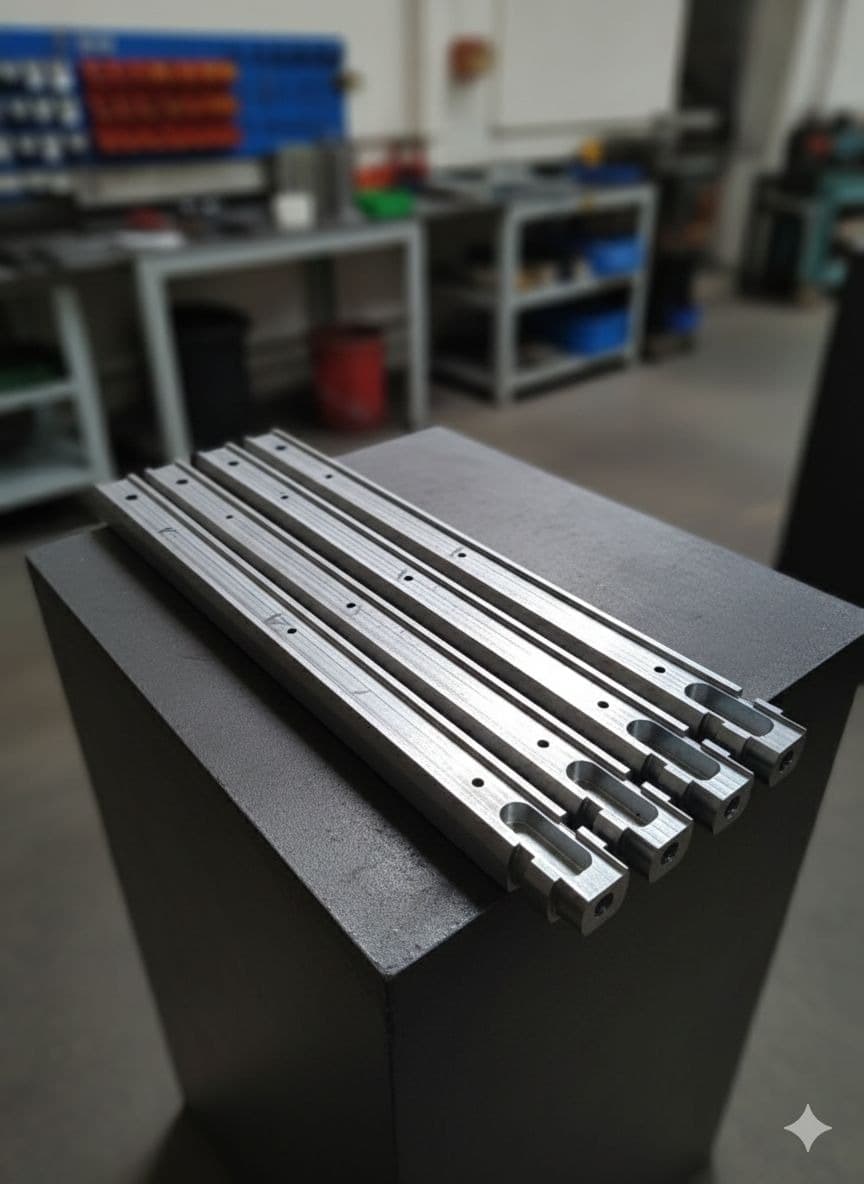


A machinist's guide to 1.2379 tool steel expander arms: machining difficulty, tolerances, and a real durability upgrade case study.
1.2379 tool steel gives production-line expander arms the wear resistance and fatigue life mild steel can't match. It cuts unplanned downtime and stretches service life well past 12 months. This guide covers machining difficulty, tolerances, design details, and a real durability upgrade that make it the right call for heavy-duty automated lines.
Expander arms are mechanical extensions that control or influence the movement of products or tooling within a production process. Common examples include:
These parts must endure repetitive motion, impact loads, abrasion, and sometimes intermittent high temperatures.
1.2379 tool steel (also known as DIN 1.2379 / EN X155CrVMo12-1) is a cold-work die steel with a proven balance of:
These features make it an excellent choice for expander arms and industrial production line components subjected to mechanical stress and surface wear.
Below is a reference table for engineers and buyers who may encounter alternate codes or brand names from different supply chains:
| Standard / Supplier | Equivalent Name / Grade |
|---|---|
| DIN / EN | 1.2379 |
| AISI / SAE | AISI D2 (close relative in performance) |
| Böhler | Böhler 2344 |
| ASSAB | ASSAB 760 |
| UNS | G52986 (approximate) |
| AFNOR | X155CrVMo12-1 |
| JIS | SKD11 (similar performance) |
Note: While these steels are closely related, heat treatment and exact chemical composition can vary. Always confirm with your materials supplier for critical tolerance and wear specifications.
This is the part material spec sheets skip: 1.2379 carries a machinability rating of roughly 2 out of 10. High carbon and chromium content that make it wear-resistant in service also make it abrasive on cutting edges during CNC machining. Tool wear per part runs higher than with mild or pre-hard steels, which shows up directly in cycle time and tooling cost.
Typical tolerance goals for precision expander arms range from ±0.01 mm to ±0.05 mm, depending on assembly requirements. Holding that tolerance through a material this abrasive comes down to machining experience, not just the right steel grade.
When designing expander arms for an industrial production line, consider:
Areas under high bending or impact should incorporate fillets, chamfers, and cross-section reinforcement to improve fatigue life.
1.2379 typically undergoes hardening and tempering to reach HRC 55–62, balancing wear resistance with toughness.
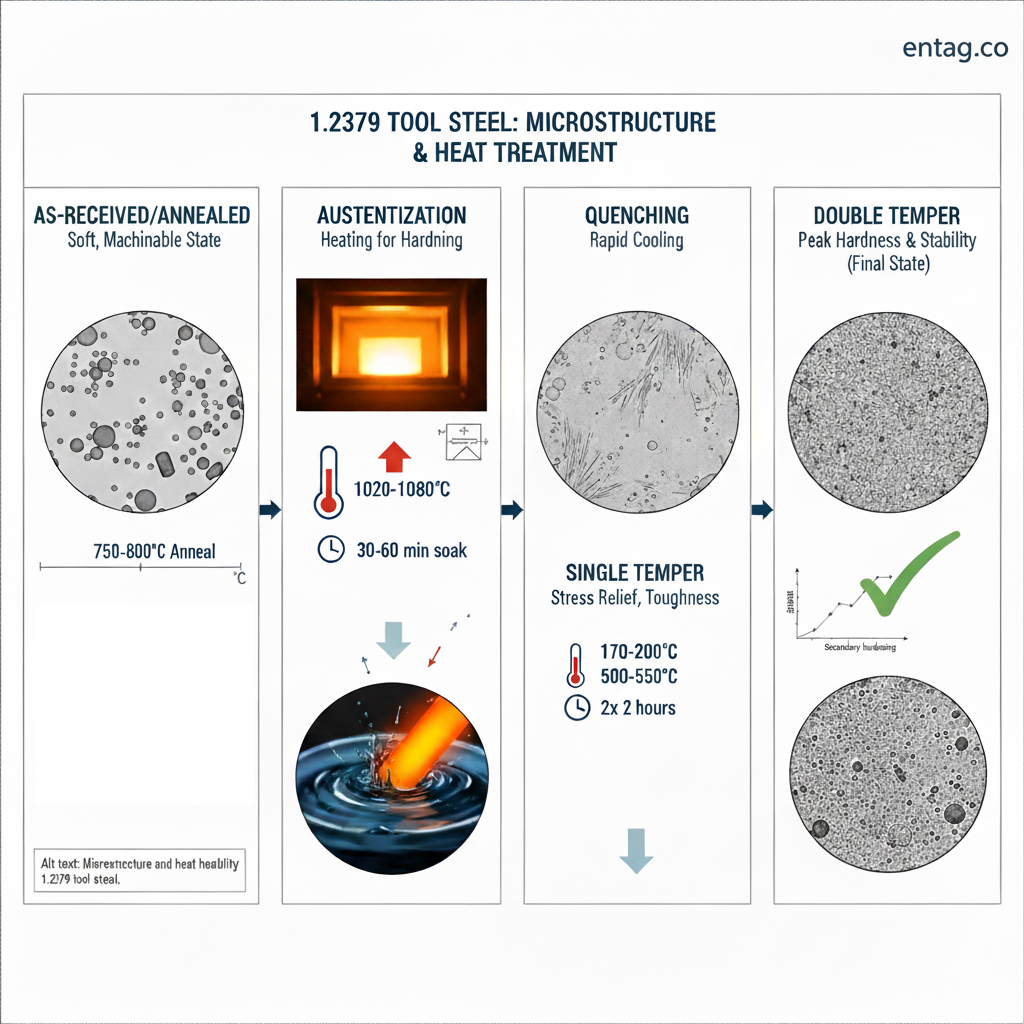
Scenario:
A metal fabrication line used mild-steel expander arms that failed every 2–3 months, causing unplanned downtime.
Solution:
Outcome:
This shows how the right material choice, paired with machining that accounts for its abrasiveness, cuts downtime and maintenance cost.
Use CMM inspection or laser scanning to verify critical dimensions before assembly, especially for interfacing surfaces with bearings or shafts.
Ensure correct fits with mating components, particularly if the expander arm includes bushes, pins, or linear guide interfaces.
Work with your heat-treat provider to preserve tolerances post-hardening. Distortion mitigation strategies like fixturing are essential.
Industrial Trends in Production Line Components
These trends reflect manufacturing demands for both agility and durability on modern production floors.
Machining high-performance steels like 1.2379 also carries industrial safety and compliance considerations:
At Entag, our metal fabrication partners in Egypt adhere to industry safety protocols, including machine guarding, coolant filtration systems, and operator certification for heavy-duty CNC centers.
What makes 1.2379 tool steel better than mild steel?
It offers higher hardness, better wear resistance, and improved fatigue life, ideal for repetitive motion parts.
Can 1.2379 be CNC milled with standard tooling?
Yes, but carbide tooling with proper feeds and cooling is recommended due to material toughness, and expect faster insert wear than with easier-to-machine grades.
Is 1.2379 available locally in Egypt?
Many steel suppliers in Cairo and industrial hubs stock tool steels or can import per specification.
Expander arms made from 1.2379 tool steel provide a reliable, wear-resistant solution for demanding production line environments. With proper CNC milling, design optimization, and heavy-duty fabrication, these components help reduce downtime and extend service life.
Looking for precision production line parts or CNC machining of tool steel components in Egypt?
Contact Entag today to get tailored solutions, fast lead times, and expert fabrication support.